A month-by-month guide to the golf season in the Algarve: course crowds, green fees, hotel prices, temperatures, daylight and rain, plus the best months to play.
Golf in the Algarve is a year-round sport. The courses never shut for a season the way they do in northern Europe, and you can tee off in shorts in January nearly as easily as in July. But the golf season in the Algarve still has a rhythm: green fees swing by more than 40% between the cheapest and dearest months, hotels fill and empty with the beach crowd rather than the golf crowd, and the weather shifts from warm-and-dry to short-and-showery and back again. This month-by-month guide covers what to expect on the course, in your hotel and in your wallet across the whole year, then names the months that give you the best balance.
Two patterns are worth holding in mind before the detail. First, green fees peak in spring and autumn (roughly March to May and October) and bottom out in mid-summer and mid-winter. Pestana's published 2025 rates, for example, run about €93 in the low season against €167 at peak for its Carvoeiro courses. Second, hotel prices and crowds follow the opposite curve: they are highest in July and August, when Algarve golf is actually at its quietest, and lowest from November to February, when some resort hotels cut back service or close for a few weeks.
Playing golf in the Algarve in January
January is the quietest and cheapest month of the year. Fairways can be soft after winter rain and a handful of courses take a short maintenance break, but tee sheets are wide open and you can often walk on. Green fees are at their lowest, and rooms are cheap where hotels are open, though choice is limited because some resorts stay closed until February. Days are short, so book a late-morning tee time and you will still finish comfortably before dark. Bright, still mornings are common, and the rain that does come tends to arrive in bands of a day or two rather than constant drizzle.
Quick numbers: highs around 16°C, lows around 8°C. About 10 hours of daylight. Roughly six to seven wet days and 50–60mm of rain. Light winds most days, with the odd Atlantic front. Hotel occupancy region-wide is around a third (about 34% in recent years).
Playing golf in the Algarve in February
February is still low season for green fees on most courses, but conditions start to turn. Rainfall eases, the daylight lengthens noticeably and the almond blossom is out. Courses get busy only around the UK half-term week, when families arrive; outside that week you will find space and value. More hotels reopen than in January, widening your choice. This is one of the best-value windows of the year, as long as you accept that an afternoon shower is still possible and the greens are not yet at their spring pace.
Quick numbers: highs around 17°C, lows around 9°C. About 11 hours of daylight. Around five wet days and 45mm of rain. February is one of the breezier months, so expect a club or two more wind on exposed holes. Hotel occupancy climbs but stays well below half.
Playing golf in the Algarve in March
In March the season steps up. Courses fill out as spring golf packages begin and Easter approaches, and green fees move into the peak band on many courses. The trade-off is some of the year's best playing weather: warm afternoons, long-enough days and grass growing back into the fairways. Hotels raise their rates but are not yet full. Book tee times and rooms well ahead for the Easter fortnight, which is the single busiest stretch of spring.
Quick numbers: highs around 18–19°C, lows around 10°C. About 12 hours of daylight. Around five wet days and 40–50mm of rain, usually in short spells. Wind is moderate. Hotel occupancy rises past 50% as Easter nears.
Playing golf in the Algarve in April
April is peak season in full swing and, for many golfers, the best all-round month to play. Days are long, afternoons are reliably warm without being hot, the rough is green and the courses are in excellent shape. It is also one of the busiest and most expensive months: green fees are at or near their annual high, popular courses book out days ahead and hotel rates are firm. If April is your window, reserve everything early and consider the quieter east or west ends of the region.
Quick numbers: highs around 20–21°C, lows around 12°C. About 13 hours of daylight. Around five wet days and 35mm of rain. Spring breezes are common, especially on coastal courses in the afternoon. Hotel occupancy is high, near 70%.
Playing golf in the Algarve in May
May is arguably the peak of the golf calendar. The weather is close to ideal, dry and warm with a very low rain risk, and the courses are at their busiest and priciest, with some operators classing May as their single highest green-fee month. Hotels are busy, but the school-holiday surge has not yet arrived, so rooms are easier to find than in July. Book tee times ahead and aim for morning slots to stay in front of the afternoon sea breeze.
Quick numbers: highs around 23°C, lows around 14°C. About 14 hours of daylight. Only four wet days and around 20mm of rain. May is among the windier months, with a regular afternoon breeze on the coast. Hotel occupancy is high, though still below the mid-summer peak.
Playing golf in the Algarve in June
June is the pivot month. Green fees drop back into the low-season band as the heat builds, yet the golf is still very good if you tee off early, and course traffic thins through the month. Hotels move the other way, climbing toward their summer peak as the beach season opens and the first school holidays begin, so you may pay less for golf and more for your room than you would in April. Daylight is at its maximum, which makes early and twilight tee times genuinely comfortable. The afternoon northerly breeze is strongest on the west coast, around Lagos and Sagres.
Quick numbers: highs around 26°C, lows around 17°C. Nearly 15 hours of daylight, the longest of the year. One or two wet days at most. A steady afternoon sea breeze on the coast. Hotel occupancy pushes past 80%.
Playing golf in the Algarve in July
July is hot, dry and quiet on the course. Along with mid-winter, July and August are the cheapest months for green fees, and tee sheets stay open because most visitors are on the beach rather than the fairway. Play at dawn or from late afternoon; the middle of the day is uncomfortable and hard on your scorecard. Hotels are the opposite story, full and expensive with UK, Irish and Portuguese school holidays all overlapping. Book accommodation months ahead, then enjoy the pick of tee times once you arrive. It runs hotter inland around Silves and on the east coast when the dry Levante wind blows.
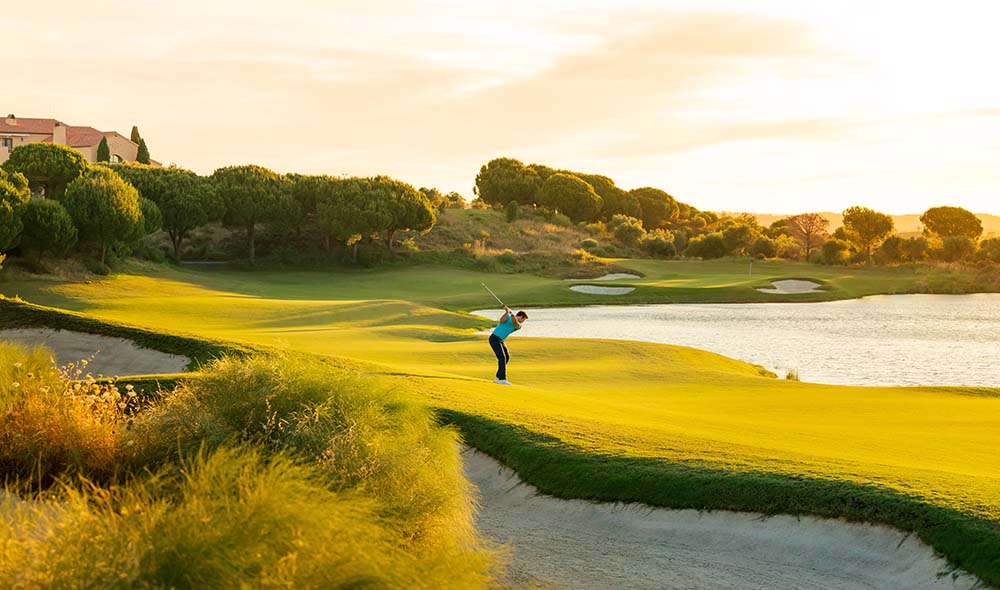
Quick numbers: highs around 28–29°C, lows around 19°C, and higher inland or during a Levante episode. About 14.5 hours of daylight. Effectively no rain. Reliable afternoon sea breeze on the coast. Hotel occupancy is near its annual peak, around 85%.
Playing golf in the Algarve in August
August is much like July: low green fees, quiet courses, packed and pricey hotels. The heat is the main obstacle, so this is a month for buggies, early alarms and plenty of water. Courses are well irrigated and stay green, though summer greens are slower than spring ones. If you can find a room at a sensible price, August is a cheap month to play a lot of golf around a family beach holiday.
Quick numbers: highs around 28–29°C, lows around 20°C. About 13.5 hours of daylight. Almost no rain. Afternoon breeze on the coast; hot and still inland. Hotel occupancy is the highest of the year, around 85–90%.
Playing golf in the Algarve in September
For many golfers September is the best month of all. The extreme heat fades, the sea is at its warmest, rain is still rare and the crowds thin once the schools go back mid-month. Green fees rise through the month as courses move from low to high season, and hotel rates ease from their August peak. Early September gives you summer weather at shoulder prices; late September gives you near-perfect golfing conditions as the peak autumn window opens.
Quick numbers: highs around 26°C, lows around 18°C. About 12.5 hours of daylight. Around two to three wet days and 25mm of rain, usually late in the month. September is the calmest month for wind. Hotel occupancy is around 70–75%.
Playing golf in the Algarve in October
October is the autumn peak. Courses are extremely busy and green fees are back at their annual high as northern Europe escapes the cold. The weather is usually excellent early in the month, still warm and mostly dry, though the first serious rain of the season often arrives in the second half. Some courses overseed their fairways now, which can mean temporary greens or minor disruption. Book tee times and hotels as far ahead as you can, because October sells out early.
Quick numbers: highs around 23°C, lows around 16°C. About 11 hours of daylight, dropping fast once the clocks go back at the end of the month. Around six wet days and 55–65mm of rain. Winds pick up later in the month. Hotel occupancy stays high, around two-thirds.
Playing golf in the Algarve in November
In November the season winds down. Green fees fall back to mid-season on most courses, and lower still late in the month, and the courses are quiet again. Weather is the gamble: you can get a run of warm, calm, blue-sky days or a week of Atlantic fronts, and November is statistically one of the wettest months. Fairways soften. Hotels are cheap and some begin to close for winter. Good value for flexible golfers who will take the weather as it comes.
Quick numbers: highs around 19°C, lows around 12°C. About 10 hours of daylight. Around six to seven wet days and 70–90mm of rain. Breezier than early autumn, with frontal winds. Hotel occupancy falls sharply, with many hotels under half full.
Playing golf in the Algarve in December
Along with January, December is the quietest and cheapest month. Green fees are at their lowest, courses are near empty and you can often book same-day. It is also the wettest month on average and the darkest, with under 10 hours of daylight, so tee times cluster around the middle of the day. A few courses close briefly for maintenance and some hotels shut until February, though the Christmas and New Year week is a small exception, with a short spike in demand and prices.
Quick numbers: highs around 17°C, lows around 10°C. About 9.5 hours of daylight, the shortest of the year. Around eight to nine wet days and 90–110mm of rain. December is among the windier months. Hotel occupancy is among the lowest of the year outside the Christmas week.
The best months to play golf in the Algarve
If you want the best conditions and don't mind paying for them, play from late April into May or from late September into October. You get long days, warm and dry weather and courses in top shape, against the highest green fees of the year, the fullest tee sheets and firm hotel rates. Book months ahead.
For the best value with still-reliable weather, target February or the late-September to mid-November stretch. Green fees sit in the low or mid band, the courses are calm and the weather is usually good enough, with the trade-off of a real chance of rain in November and slightly slower greens.
For the cheapest golf, play in June, July or August. Green fees are as low as they get and the courses are quiet, but you have to tee off early to beat the heat and you will pay peak prices for a busy hotel. Mid-winter, December and January, is just as cheap for both golf and rooms, with the trade-off of short days, soft fairways and the highest rain risk of the year.
In short: spring and autumn for conditions, winter for a bargain, high summer for empty fairways if you can handle the heat. The quietest tee sheets of all are in December, January, July and August. When you have picked your month, you can compare courses, green fees and nearby hotels on the interactive map.